|
Sign up for Emails to receive notifications on our special promotional events, exclusive offers, and gifts.
Same Day or Next Day Consultations are avialble |
|
![]() |
|
|
To receive 10% discount, fill in the form below and start talking with Dr. Sean directly. Call (888) 543-8424 to receive 10% discount on hair restoration and a free hair loss exam ($350 value). (secured)
|
|
|
Privacy by SafeSubscribe
|
|
|
Immediate Call Back Guaranteed during working hours
|
Sign up for a free thorough examination
Before you commit to any hair restoration, we strongly suggest attending Dr. Behnam’s free hair loss examination. Dr. Behnam will perform a thorough exam of the back of the scalp for quality hair that can be transplanted successfully and will never thin out or fall. If back of scalp is not a good choice, Follicular Unit Extraction (FUE) can be used to transplant hairs from other areas such as chest, arms, or legs.
Dr. Behnam is an expert in hair transplant and dedicated to the highest quality hair restoration. He will meet with you and explain the pros and cons of the hair transplant procedure and help design a specific plan for you.
![]() |
![]() |
|
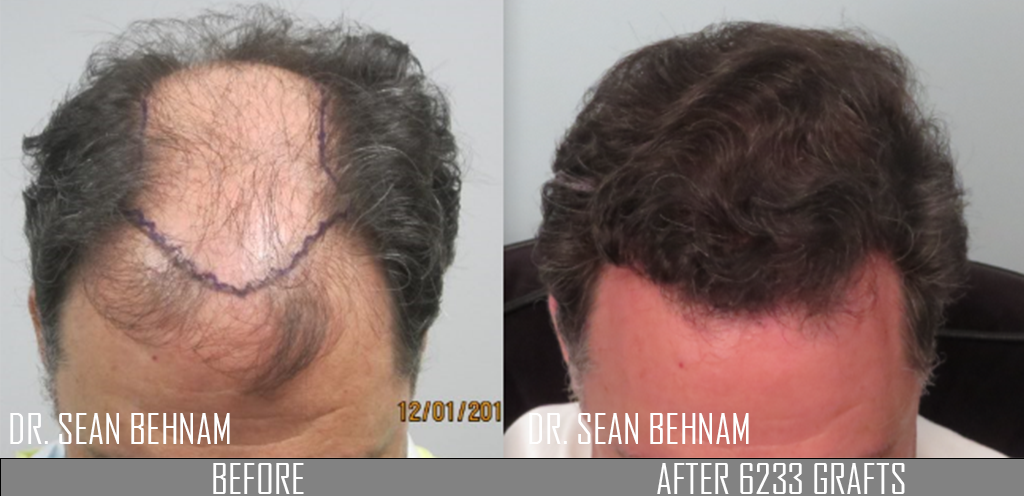
Before Surgery
|
After Surgery
|
Hair Loss Examination
There are many aspects that make what we offer more than just a consultation – it is a hair loss examination. In our practice, you will always meet with Dr. Behnam and he will personally examine your hair loss and answer all of your questions.
- Have a full hair examination done.
- Get the tough questions answered.
- Are you really a good candidate?
- Do you have realistic expectations to get good results?
- Do you have quality hair in your donor area?
- For costing, how many grafts you might need (on average, each hair graft has 2 to 3 individual hairs.)
What are the four stages of examination?
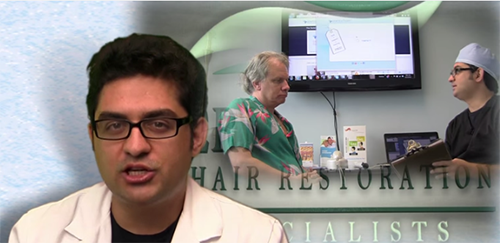
Dr. Behnam conducts one of the most comprehensive hair examination consisting of:
1. Hair Loss & Hair Transplant Education
2. Microscopic Hair Analysis
3. Hair Density Calculation
4. Hair Mapping for accurate costing
What is hair loss and hair transplant education?
The meeting begins with our in house hair consultant Marc who himself has been a hair transplant candidate of Dr. Behnam. Marc will explain the basics of hair loss and hair transplantation. Before and after pictures are viewed and we thoroughly explain what we do to ensure each patient has the best possible result with minimal discomfort and down time.
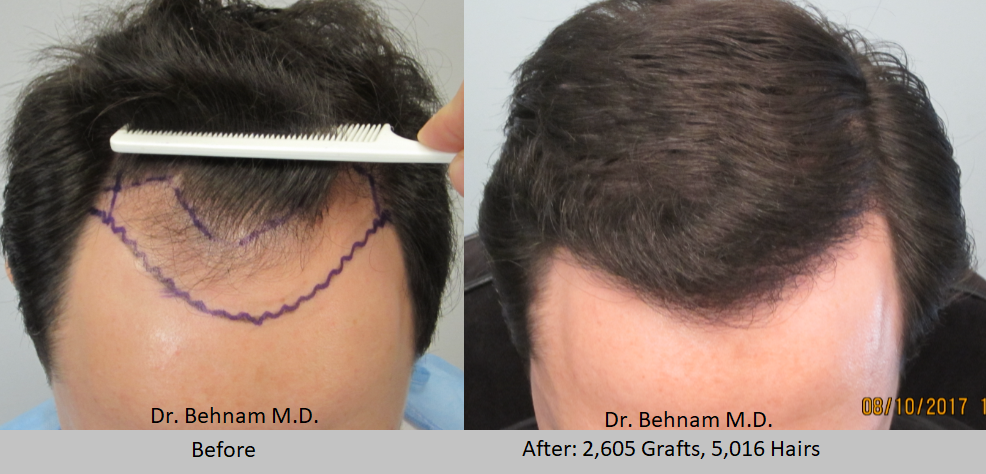
Marc shares his experience to give the candidates an idea of what to expect. Also, the patient gets a chance to examine Dr. Behnam’s work by examining Marc’s new natural hairline and Marc’s before and after hair transplant pictures.
After the brief meeting with Marc, you will next meet with Dr. Behnam to discuss your goals and concerns.
![]() |
![]() |
|
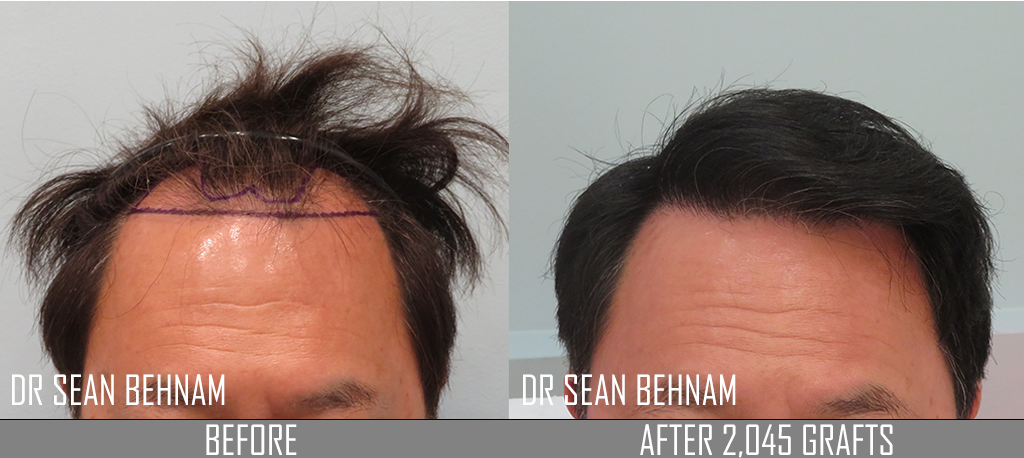
Before Surgery
|
After Surgery
|
Before Hair Transplant (left). The picture to the right is 10 months after the procedure. More than 2500 hair grafts were transplanted for Marc.
What is Microscopic Hair Analysis?
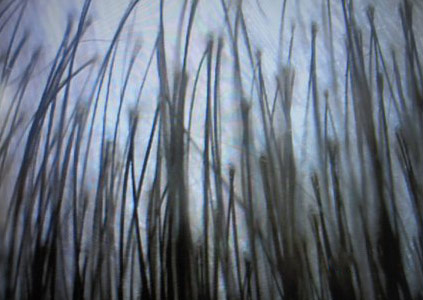
Using a video microscope, Dr. Behnam analyzes the thinning areas as well as the donor area. He will determine whether you have strong donor hair and whether you are a good hair transplant candidate. If the donor area is not affected by hair loss, the patient is a good candidate for hair transplantation. The hair can be moved from the back of the head to the balding areas and it will be permanent.
If the patient is suffering from generalized thinning, the donor area is also thinning and will not be permanent if transplanted. So the patient with generalized thinning is not a good hair transplant candidate. Generalized thinning is just one example of a condition that would exclude a patient from being a transplant candidate. This is why a microscopic analysis of every potential patient is so important.

The picture above shows an analysis of a patient who has generalized hair loss and thus he has a poor donor hair follicles. Hence he is not a good hair transplant candidate. As you can see, he has generalized thinning of he grafts.

The image above shows a patient with strong hair follicles, demonstrated by thick, dark and black hair follicles without much thinning. These hairs are great transplant candidates as they are resistant to thinning and are thus permanent.
What is Hair Density Calculation?
Dr. Behnam calculates the density (number of grafts per centimeter) in the donor area and determines how many grafts he can remove in one session.
Most people have between 40 and 80 grafts per square centimeter in their donor area. In the initial meeting, Dr. Behnam calculates the patients’ density in the donor area which will ultimately determine how much of the bald areas can be covered in a single procedure. A person who has 80 grafts per square centimeter will have more grafts to transplant than the person who has 40 grafts per square centimeter in the donor area, and thus a greater balding area can be covered. These measurements give the patient a realistic expectation of what can be accomplished in a single procedure.
Often, patients with lower density count realize they can not achieve the results they want and decide not to do the procedure. This is very important. You could only figure out whether you have a poor density by having a density calculation done prior to the procedure. We feel that this is the most ethical way to inform the patient of what to expect.
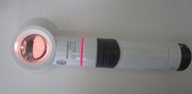
The Densitometer
This enables for accurate calculation of the density (grafts per centimeter square) in the donor area.
What is Hair Mapping?
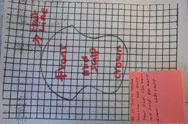
Dr. Behnam maps out how many centimeters of balding areas are needed to be covered on top of the scalp and the number of grafts that are needed. This is done by placing a square centimeter grid over the patient’s head and outlining the area to be covered. The area can then be measured. Please look below for an example of the hair mapping grid.
If the area to be covered includes the front and mid scalp area, 25 grafts placed per square centimeter are required to give adequate coverage. Also, if a new hairline needs to be created, 400 grafts are usually required for the hairline (actual amount may vary depending on the size of the patients head). If the area to be covered is the crown area, 35 grafts per square centimeter is required to cover the area. The crown requires more grafts because it is normally viewed from the top looking down revealing the space between each graft. So, lets say the hair mapping process has indicated that a patient has 50 square centimeters to be covered in the mid scalp area and also needs a new hair line. We would multiply 50 times 25 to determine that the patient needs 1250 to cover that area. Add 400 grafts for the hair line and we determine that the patient needs 1650 grafts to fill the area with adequate density.
Hair mapping Grid

The hair mapping grid enables Dr. Behnam to calculate how many square centimeters you need to fill and thus how many grafts you require for the entire area. The drawing on the grid indicates the bald area needed to be covered with hair.